
Saudi Arabia’s $1.27 Trillion Economy: What It Means for Marketers (2026)
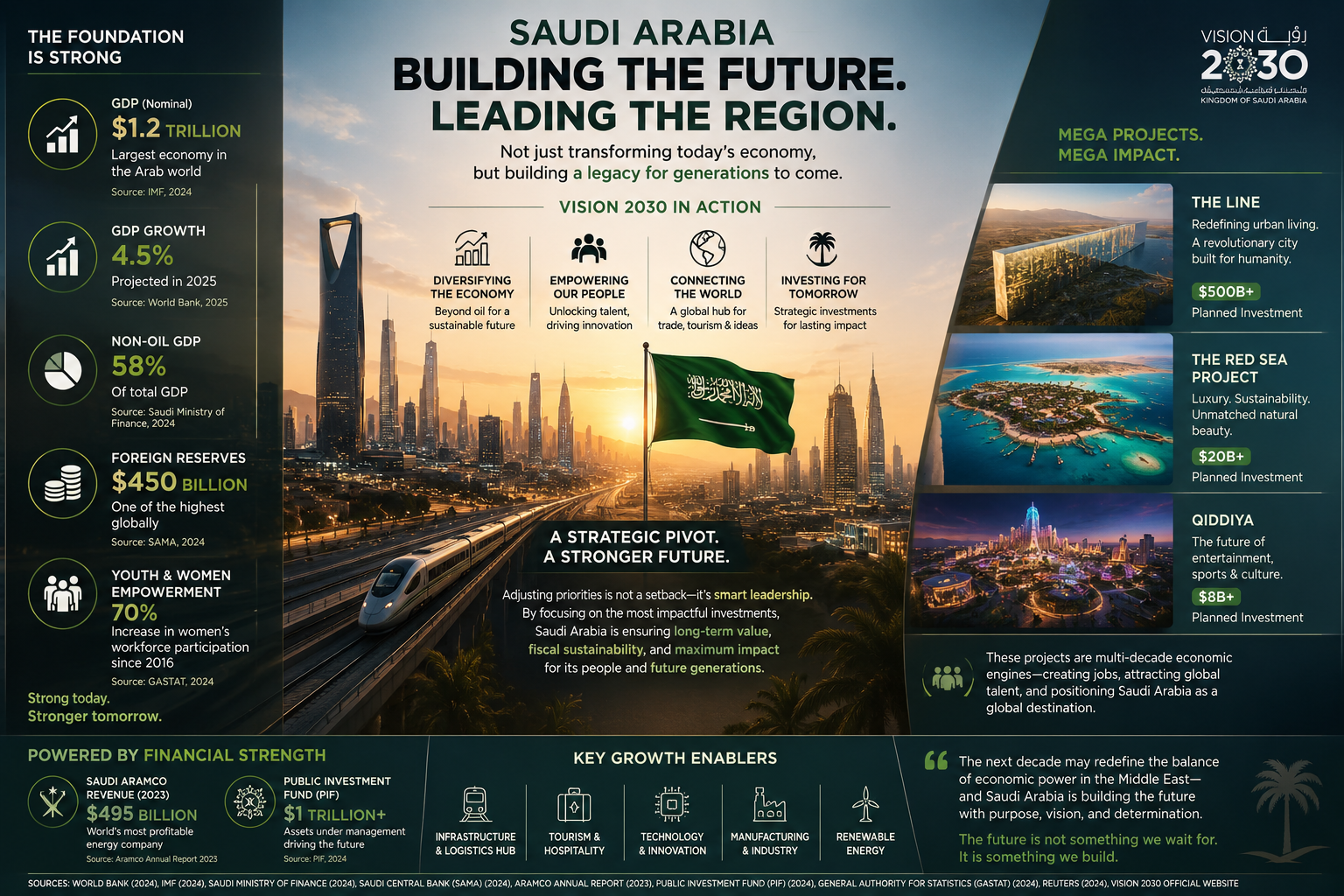
Saudi Arabia’s nominal GDP reached roughly US$1.27 trillion in 2025, the largest economy in the Arab world, and the non-oil sector now accounts for about 55% of real GDP, up from around 45% when Vision 2030 launched in 2016. For any business selling into the region, that shift is the single most important market story of the decade, and it has direct consequences for how you should market there.
This is a marketer’s read of the Saudi opportunity: what the numbers actually say, which sectors are growing, and what the diversification means for anyone trying to win Saudi customers in 2026.
$1.27TSaudi nominal GDP, 2025, largest in the Arab world
55%non-oil share of real GDP, up from ~45% in 2016
4.5%real GDP growth in 2025
$925Bapproximate PIF assets under management
The hospitality side of this story sits in my GCC hotel marketing hub, where Saudi domestic demand is reshaping the regional travel market.
1. The Numbers That Matter
Start with the headline figures, because the scale is easy to underestimate.
Saudi Arabia’s nominal GDP surpassed US$1.27 trillion in 2025 according to the General Authority for Statistics, making it the 17th-largest economy globally and the largest in the Arab world. Real GDP grew 4.5% in 2025, a sharp acceleration from 1.3% in 2024, and the IMF projects continued growth around 3.5% to 4.5% through 2026 and 2027, placing the Kingdom among the fastest-growing G20 economies.
But the number that actually matters for marketers is not headline GDP. It is the non-oil share.
Non-oil activities now make up around 55% of Saudi real GDP, up from roughly 45% at the launch of Vision 2030 in 2016. That is where the consumers, the private-sector jobs and the discretionary spending live, and it is growing faster than the economy as a whole.
As of the 2025 Vision 2030 Annual Report, 93% of the programme’s key performance indicators were fully or partially met, and the Public Investment Fund’s assets have grown past US$925 billion, funding the mega-projects and new industries reshaping the domestic market.
2. Where the Growth Is
The diversification is deliberately multi-sectoral. For a marketer deciding where the addressable demand is, these are the sectors moving fastest.
| Sector | 2025 signal | Marketing relevance |
|---|---|---|
| Wholesale, retail, restaurants & hotels | ~6.2% growth | Direct consumer demand, hospitality, ecommerce |
| Financial services | ~6.1% growth; credit expanding 10-12% a year | Fintech, BNPL, banking, insurance |
| Transport & logistics | Steady expansion on giga-project demand | Ecommerce fulfilment, B2B |
| Tourism | 18M+ foreign Umrah pilgrims in 2025 | Travel, hospitality, retail |
| Manufacturing | ~4% growth | Industrial B2B, localisation |
Sources: GASTAT 2026; Vision 2030 Annual Report 2025; IMF Article IV 2025.
3. What Diversification Means for Marketers
The structural shift changes the Saudi consumer market in ways that matter for how you spend a marketing budget.
First, a growing non-oil private sector means a growing base of employed, spending consumers, with female labour-force participation up to around 35% and unemployment down to roughly 7.2%. That is more households with discretionary income than the market had even five years ago.
Second, the demand is increasingly domestic and digital. The same forces driving Red Sea resort occupancy and Riyadh Season are creating a consumer used to booking, buying and researching online, in Arabic, on mobile. A brand that shows up only in English, with card-only checkout and no local payment methods, is invisible to a large slice of this market.
Third, the mega-projects (NEOM, Diriyah, Qiddiya, the Red Sea) are not just construction stories. They are demand-generation engines that create tourism, retail and service markets around them, and government-backed marketing campaigns you can build alongside rather than against.
4. How to Win Saudi Customers in 2026
The practical implications for a marketing programme targeting Saudi Arabia:
Localise properly. Arabic-first creative and landing pages, not machine-translated toggles. Local payment methods (mada, Apple Pay, Tabby, Tamara). Right-to-left interfaces that actually work.
Go mobile-first. Saudi digital behaviour is overwhelmingly mobile. A desktop-designed funnel loses conversions before the shopper reaches checkout.
Build first-party data. As in every market, owned audiences (email, WhatsApp, app installs, loyalty) are the cheapest and most durable demand, and they compound as the consumer base grows.
Ride the government demand. Vision 2030 campaigns, Riyadh Season, tourism authority pushes and mega-project openings all generate intent. The brands that win capture that intent rather than competing with it.
Frequently Asked Questions
How big is the Saudi Arabian economy in 2026?
Saudi Arabia’s nominal GDP was roughly US$1.27 trillion in 2025 and is forecast around US$1.1 to 1.3 trillion in 2026 depending on methodology and oil prices, making it the largest economy in the Arab world and among the top 20 globally. Real GDP grew 4.5% in 2025, with the IMF projecting continued growth of 3.5% to 4.5% through 2027.
What is the non-oil share of Saudi GDP?
Non-oil activities accounted for approximately 55% of real GDP in 2025, up from around 45% when Vision 2030 launched in 2016. This is the more important figure for businesses, because the non-oil economy is where consumer demand, private-sector employment and discretionary spending are concentrated, and it is growing faster than the overall economy.
Which Saudi sectors are growing fastest?
In 2025, wholesale and retail trade, restaurants and hotels grew around 6.2%, financial services around 6.1% with bank credit expanding 10-12% a year, and transport and logistics expanded on giga-project demand. Tourism is a major growth engine, with more than 18 million foreign Umrah pilgrims in 2025.
Why does Vision 2030 matter for marketing in Saudi Arabia?
Vision 2030 is expanding the non-oil private sector, creating more employed, spending consumers, and driving a domestic, digital, Arabic-first market. It also generates government-backed demand through tourism campaigns, Riyadh Season and mega-project openings. Brands that localise properly and capture that government-generated intent are best positioned to grow.
What do brands need to get right to sell in Saudi Arabia?
Arabic-first, mobile-first execution with local payment methods such as mada, Tabby and Tamara; genuine right-to-left interfaces; first-party data capture for durable owned audiences; and campaigns built alongside government demand drivers rather than competing with them. Card-only, English-only funnels leave a large share of the market unaddressed.
The Bottom Line
Saudi Arabia is not an emerging opportunity. It is the largest economy in the Arab world, growing at G20-leading rates, actively shifting toward a non-oil, consumer-driven, digital economy. For marketers, the winners will be the brands that localise seriously, build owned audiences early, and ride the government demand rather than ignoring it.
Work With Me
If you are entering or scaling in Saudi Arabia and need a marketing programme built for how this market actually behaves, Arabic-first, mobile-first, data-driven, this is the work I do across performance marketing, SEO, ecommerce and growth strategy.
Email me: salmangul@hotmail.com
Tell me your category and your target segment, and I will show you how to reach the Saudi consumer profitably.