Beauty and Cosmetics Marketing in the GCC: Market Data, Growth and the Digital Playbook (2026)
GCC beauty & cosmetics marketing
Digital, ecommerce & performance marketing for beauty and cosmetics brands in the GCC
The market data, the consumer and the digital playbook for one of the fastest-growing, most socially-driven beauty markets on earth, written by a marketer who has spent four years running GCC beauty and fragrance ecommerce, sales and operations end to end.
$9.0BGCC cosmetics market in 2025, on the way to $15.1B by 2034
52%of the GCC beauty market held by Saudi Arabia, the clear leader
~30%skincare is the single largest category, and among the fastest-growing
SocialTikTok, influencers and social commerce now drive beauty discovery and sales
The market
The GCC is one of the world’s fastest-growing beauty markets.
Gulf consumers spend heavily on beauty and personal care, on the order of $250 per person a year, and they do it in one of the most connected environments anywhere: internet penetration near 99% and social-media reach above 94% of the population in Saudi Arabia. That combination, high spend plus deep digital adoption, is exactly why beauty in this region is won on performance marketing, social commerce and retention, not on shelf space alone.
Sources: IMARC Group GCC cosmetics market, 2026; Mordor Intelligence country beauty & personal care reports, 2026. Figures approximate and vary by research firm.
Country by country
Where the demand actually sits
| Market | Position in 2026 | What is driving it |
|---|---|---|
| Saudi Arabia | Dominant, ~52% of GCC beauty | Population scale, Vision 2030, 94%+ social reach, women’s rising workforce participation, skincare and makeup demand |
| UAE | Clear second, ~$3.3B market | Tourism inflows, a digitally engaged population, luxury and international-brand concentration, strong ecommerce |
| Qatar | Small but high-value | High per-capita spend, premium skincare and anti-aging demand, gifting culture |
| Kuwait, Bahrain, Oman | Smaller, affluent | High disposable incomes, social-media-led discovery, premium and clean-beauty appetite |
Sources: IMARC, Mordor Intelligence, Chalhoub Group GCC personal-luxury reporting, 2025–2026. Shares approximate.
The category
What makes GCC beauty different
Selling beauty in the Gulf is not selling beauty in London or Seoul. Discovery is social-first, trust runs through halal and clean credentials, skincare leads the basket, and the market is premiumising fast, and a brand that understands all four wins.
Discovery is social
TikTok, influencers and social commerce
Beauty discovery in the GCC happens on social. TikTok drives beauty tutorial searches for around 40% of Gulf youth, Saudi women are among the most engaged makeup and fragrance audiences anywhere and take most of their inspiration from social platforms, and TikTok Shop and live shopping are compressing discovery-to-purchase into a single feed. Performance creative, creators and social commerce are the growth engine, not an add-on.
TikTok drives ~40% of GCC youth beauty searches
See the roadmap →
Trust & values
Halal, clean and ingredient-led
Gulf beauty buyers increasingly shop on values and ingredients. Around 80% say they will pay more for halal-certified cosmetics, and demand for clean, natural, cruelty-free and toxin-free formulations is rising across skincare and makeup. Halal and clean positioning is not a niche in this region, it is fast becoming a baseline trust signal that shapes conversion.
~80% will pay more for halal-certified beauty
See the roadmap →
Skin-first
Skincare and dermocosmetics lead
Skincare is the largest category, around 30% of the market in Saudi Arabia and roughly a third of Middle East cosmetics, and among the fastest-growing. The harsh climate, high sun exposure and a wellness-led shift toward skin health make dermocosmetics, sun care and anti-aging structurally strong. Beauty marketing here that leads with skin science and routine, not just colour, compounds.
Skincare ~30% of the market, and growing
See the roadmap →
Premium & personal
Premiumisation and localisation
The market is premiumising, premium and luxury segments are growing faster than mass, and global houses are investing directly in the region, while consumers increasingly want beauty tuned to local preferences and skin tones rather than an imported Western ideal. The winning brands pair premium, dermatologically-credible products with genuinely localised Arabic-first marketing and creator ecosystems.
Premium segments outpacing mass on growth
See the roadmap →
The structural forces
Where the growth is fastest
Beauty and personal care in the GCC is not one flat market, it is several segments moving at different speeds. Makeup and color cosmetics, premium tiers and natural or organic lines are all outpacing the market average, while everyday personal care grows more slowly off a much larger base. For a brand deciding where to put marketing budget, the momentum map matters as much as the size map.
Sources: Mordor Intelligence GCC and country beauty & personal care reports, 2026. Segment CAGRs are approximate and vary by market.
The library
The beauty marketing playbooks
This hub grows into a full library of beauty-specific marketing playbooks, each built on the same standard as the rest of this site: real data, worked context and execution you can actually use across digital marketing, ecommerce, performance and growth.
Who is writing this
Four years inside GCC beauty and fragrance ecommerce
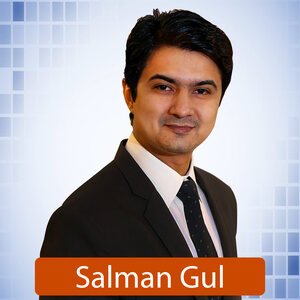
I am Salman Gul. For four years I ran the full GCC online beauty and fragrance operation end to end: ecommerce marketing, sales and operations across the Gulf, covering paid media, performance, CRM and retention, merchandising, conversion and the day-to-day of actually selling beauty online in this region. Alongside that I have spent over a decade in GCC digital and performance marketing across beauty, retail, QSR, furniture, tourism and more.
4 yrs
running GCC beauty and fragrance ecommerce, sales and operations.
Full funnel
paid media, performance, CRM, retention, merchandising and conversion.
10+ yrs
in GCC digital and performance marketing across categories.
Data-led
every decision tied to revenue, repeat rate and true category economics.
Questions
GCC beauty market FAQs
How big is the GCC beauty and cosmetics market in 2026?
The GCC cosmetics market was around $9.0 billion in 2025 and is projected to reach roughly $15.1 billion by 2034, a CAGR of about 5.9%. The broader beauty and personal care market is on track to exceed $11.5 billion by 2028. Saudi Arabia is the largest single market, holding roughly half of GCC demand.
Which country leads GCC beauty?
Saudi Arabia, with around 52% of the GCC beauty market, driven by population scale, Vision 2030, very high social-media penetration and rising women’s workforce participation. The UAE is the clear second at roughly a $3.3 billion market, powered by tourism, luxury concentration and strong ecommerce.
What is the biggest beauty category in the GCC?
Skincare, at around 30% of the market in Saudi Arabia and roughly a third of Middle East cosmetics, and it is among the fastest-growing. The harsh climate and a wellness-led shift toward skin health make skincare, sun care and dermocosmetics structurally strong. Colour cosmetics and premium tiers are growing fastest by rate.
Which channels drive beauty sales in the GCC?
Social and ecommerce lead. TikTok, Instagram and Snapchat drive discovery, influencers and creators shape preference, and social commerce plus TikTok Shop compress discovery to purchase. Paired with a strong Arabic-first ecommerce experience and retention, this is where GCC beauty growth is won.
Is halal and clean beauty important in the Gulf?
Yes, and increasingly so. Around 80% of GCC shoppers say they will pay more for halal-certified cosmetics, and demand for clean, natural and cruelty-free formulations is rising. Halal and clean credentials are becoming a baseline trust signal that materially affects conversion.
Get in touch
Building or scaling a beauty brand in the Gulf?
I bring four years of hands-on GCC beauty and fragrance ecommerce, sales and operations, plus a decade of regional performance marketing, to the specific problem of selling beauty in this market: the consumer, the social and creator channels, the retention, and the numbers that actually move a beauty business.
Email salmangul@hotmail.com